Space planning//12 min read
Types of Office Workspaces in Singapore: Which Model Fits Your Team
Compare types of office workspaces in Singapore (private offices, open plan, activity-based working, hybrid neighbourhoods) and how to fit them out.
Choosing among types of office workspaces in Singapore is really choosing how people focus, meet, and show up. The fit-out either supports that model, or fights it every day.
Below is a practical map for SMEs and growing teams planning a bare unit or major reconfiguration.
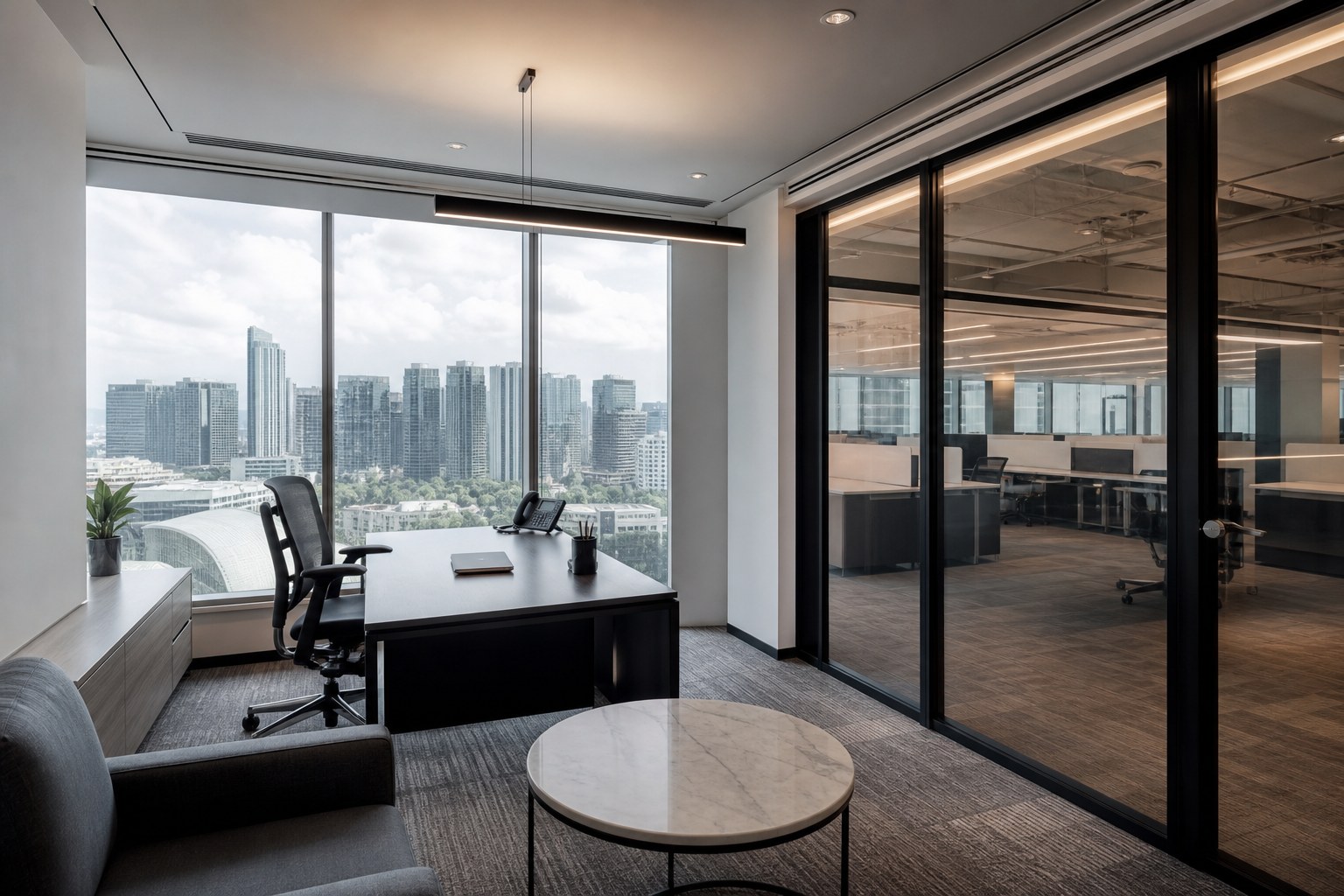
1. Private office / cellular
Individual or small-team rooms with doors. Strong for confidentiality-heavy teams (legal, finance leadership, clinics-adjacent admin). Weak for collaboration density and daylight if overused.
- Fit-out cues: more solid or acoustic glass rooms, quieter corridors, disciplined storage.
- Risk: empty rooms on hybrid days waste expensive NLA.
2. Open plan
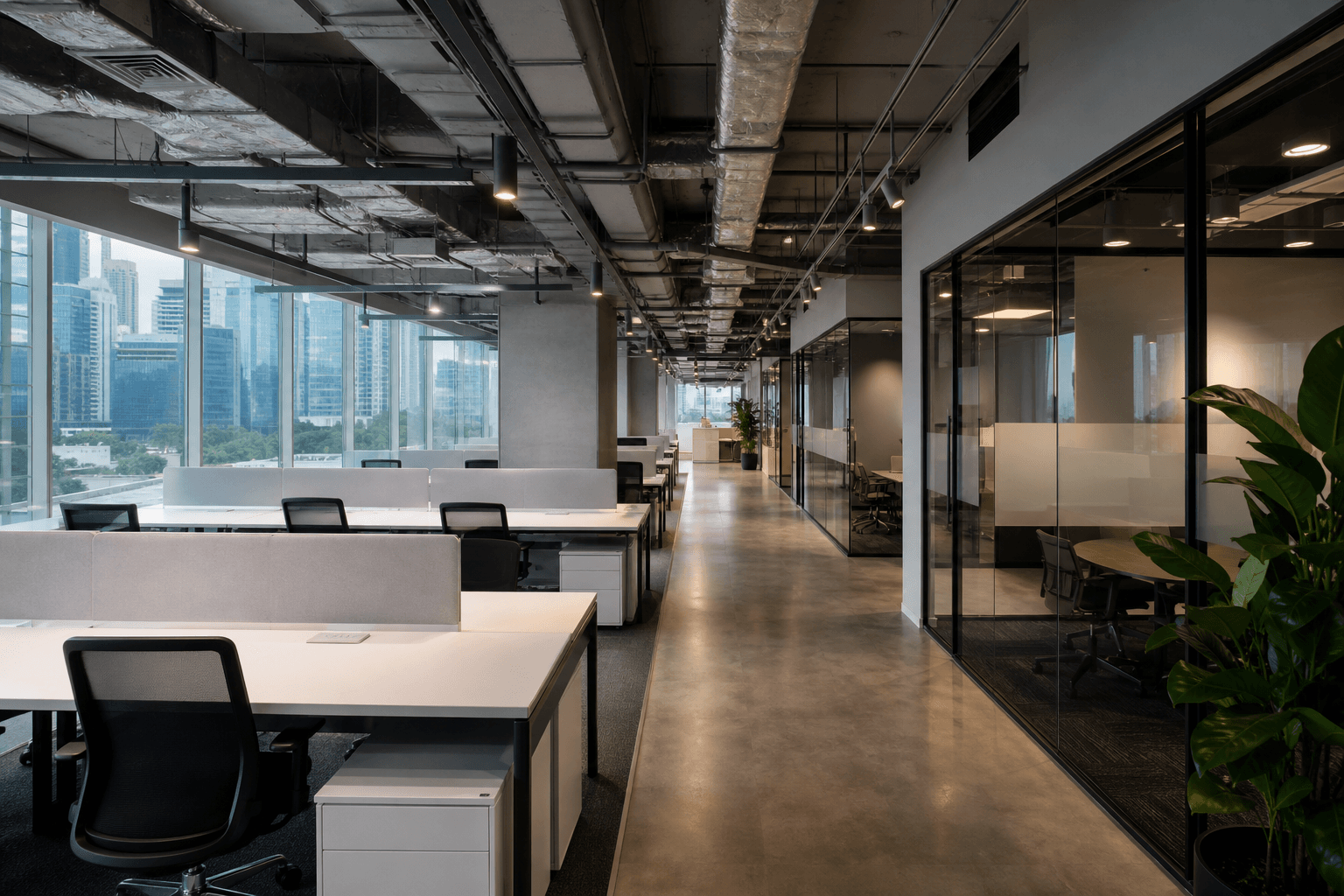
Still the default for many Singapore floors. Efficient, bright, flexible, and brutal if you skip meeting rooms and acoustic strategy. Read our deeper note on open-plan design.
3. Activity-based working (ABW)
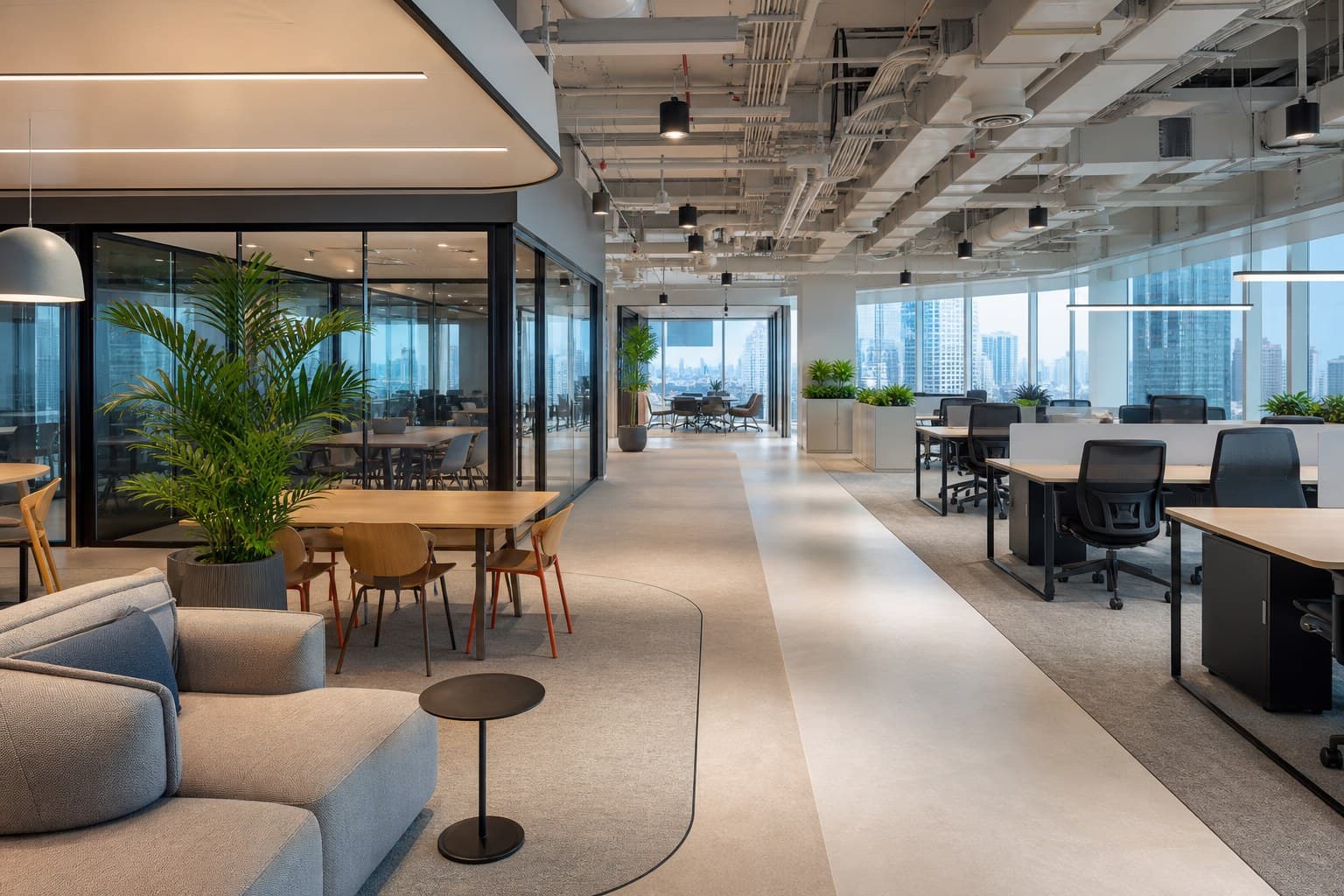
People choose settings by task: focus desks, huddle corners, quiet rooms, lounge collaboration. Works when culture supports movement and the floor has enough variety.
- Needs clear zones, not random furniture scattered for Instagram.
- Needs more enclosed rooms per head than pure assigned open plan.
- Needs storage strategy, bags and monitors cannot live everywhere.
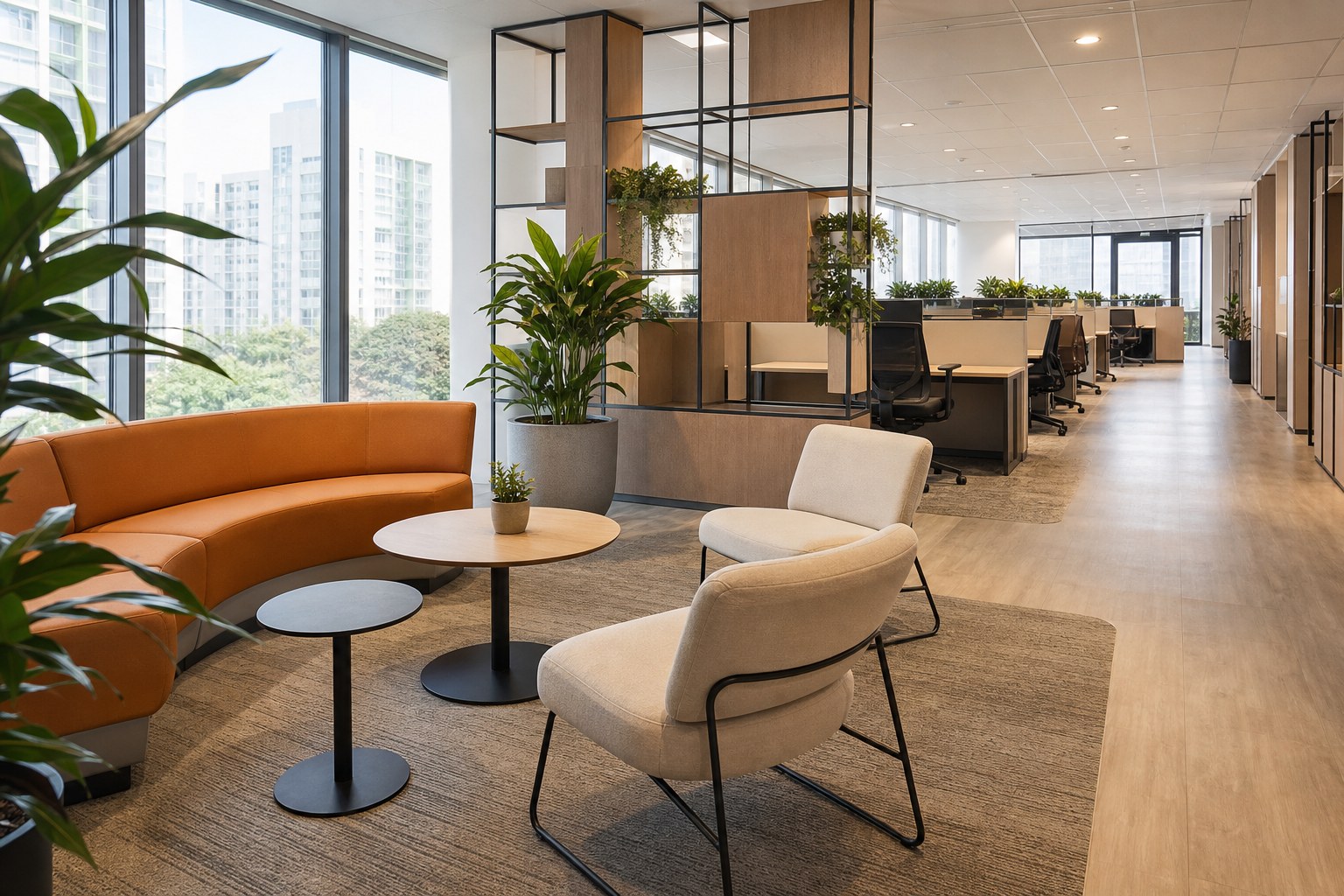
4. Hybrid / hot-desking neighbourhoods
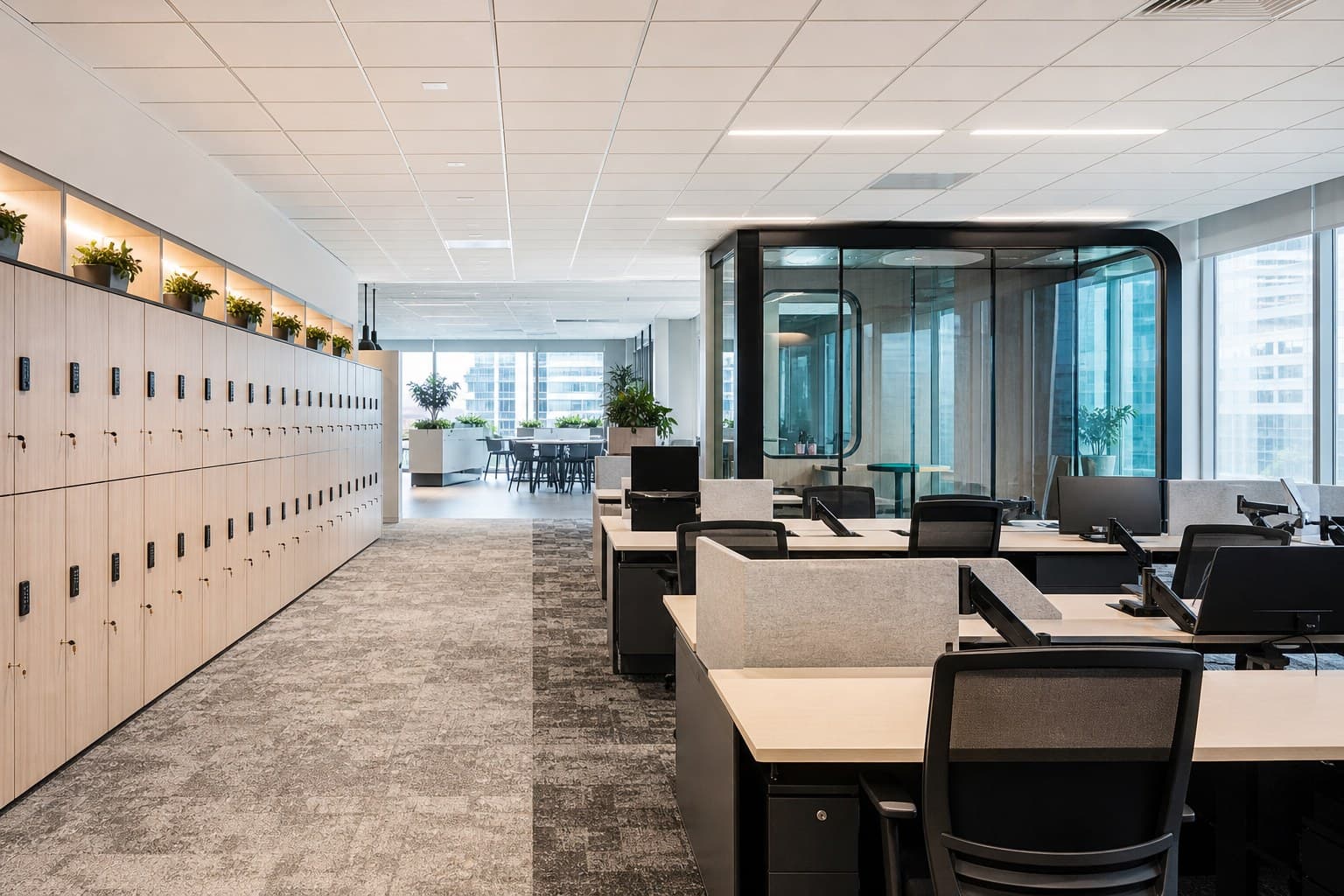
Desks are shared; attendance is uneven; lockers and bookable rooms become critical. See the dedicated guide on hot-desking and hybrid offices.
5. Client-facing professional suite
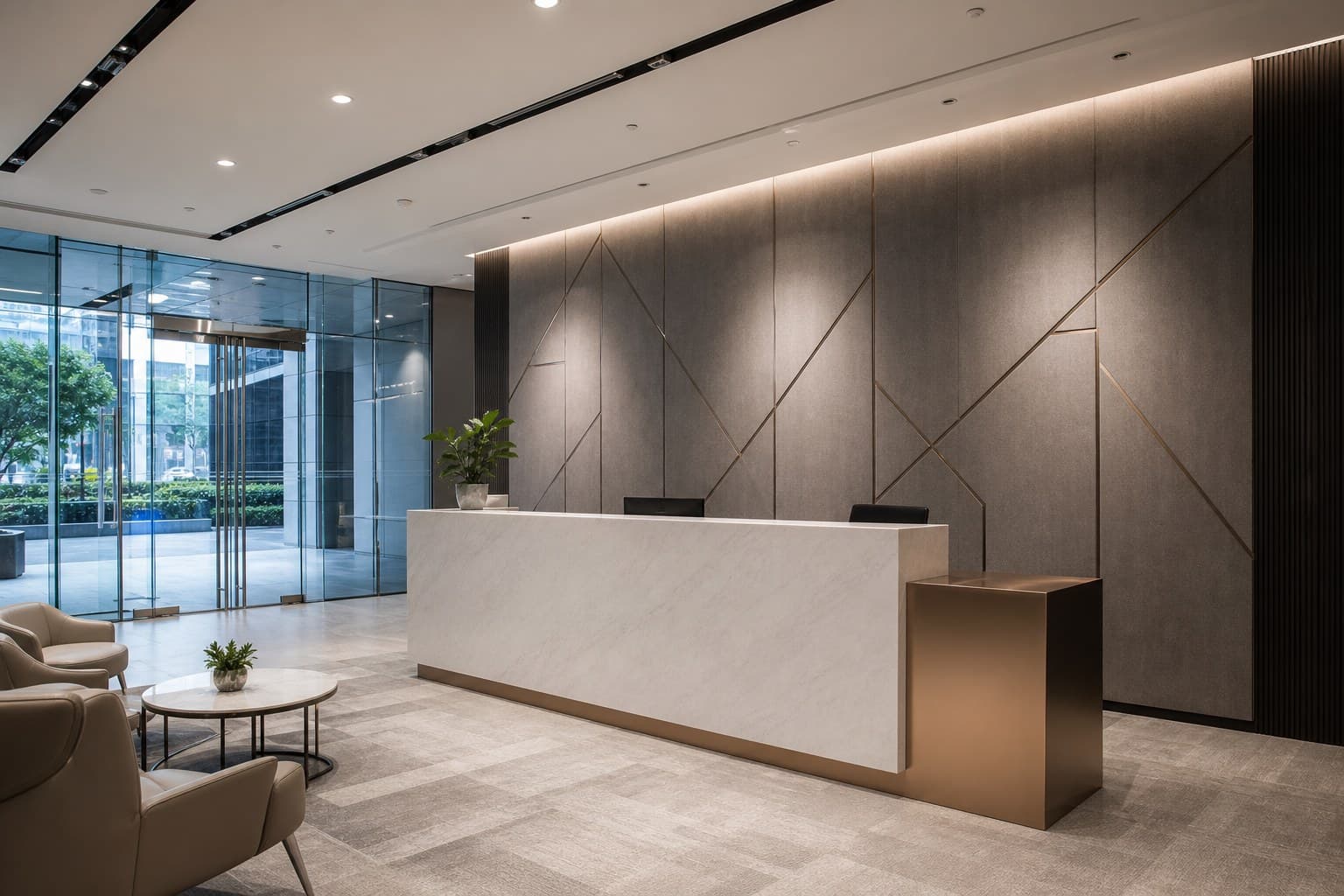
Reception, waiting, and polished meeting rooms take priority over maximising desks. Common for consultancies, family offices, and sales-led teams. Pair with reception design and meeting room planning.
How to choose without a 40-page workplace study
- Track a real week: focus hours, meeting peaks, client visits, confidential calls.
- Set assigned vs flexible desk ratio honestly.
- Protect acoustic rooms before you add “nice-to-have” lounge furniture.
- Stress-test growth for 12–18 months, Singapore leases punish short-term thinking.
- Only then draw partitions and furniture modules.
Fit-out implications by model
| Model | Glass / rooms | Furniture | M&E notes |
|---|---|---|---|
| Private heavy | High enclosure | Fewer shared settings | More zoning for aircon |
| Open plan | Moderate glass suites | Standard workstations | Power density at desks |
| ABW | Diverse room mix | Varied settings + storage | Power in more zone types |
| Hybrid | Bookable rooms + booths | Shared desks + lockers | Robust Wi-Fi / power everywhere used |
FAQ: types of office workspaces Singapore
Is open plan dead?
No. Pure open plan without rooms is struggling. Open plan with a deliberate room mix is still the most common Singapore SME solution.
Can we change workspace type later?
Partially. Demountable glass and modular furniture help. Wet trades and fixed joinery do not.
What should we decide first: brand look or workspace model?
Workspace model first. Brand finishes dress the operating system, they should not replace it.
Tell us how your team works and we will translate it into a Singapore floor plan and fit-out scope.
Planning a Singapore office project? Start a fit-out or reinstatement inquiry.